



You already know resveratrol from a glass of red wine. What you might not know is that this grape-derived compound has quietly become one of the most interesting antioxidants in skincare. If you have been curious about resveratrol for skin, especially as summer ramps up the environmental stress your complexion faces, here is the honest, science-first breakdown: what it does, what it does not do, and how to actually use it.
What Is Resveratrol, and What Does It Do for Skin?
|
|
Here is what makes it worth a spot on your shelf. Antioxidants help defend your skin against oxidative stress, the daily wear and tear caused by things like UV light, pollution, and blue light. Free radicals generated by those stressors chip away at collagen and elastin, the proteins that keep skin looking bouncy and firm. Resveratrol helps counter that process, and research suggests it may also support the skin's own antioxidant network, making it a quiet multitasker rather than a one-note ingredient. Because it helps protect and support skin over time, resveratrol tends to be grouped with the antioxidants worth using long term, not just for a quick seasonal fix.
Why Resveratrol for Skin Matters More in Summer
Summer is the peak season for oxidative stress. Longer days, stronger sun, more time outdoors, and higher heat all mean more free-radical activity on your skin. That is exactly the environment where an antioxidant like resveratrol earns its keep, working alongside the rest of your routine to help defend against visible signs of environmental wear.
One important caveat, because trust matters more than hype: resveratrol for skin is not a substitute for sunscreen. Antioxidants and SPF do two different jobs. Sunscreen filters and blocks UV rays before they reach your skin. Antioxidants help mop up the free radicals that slip through. You want both, layered in the right order, not one instead of the other.
That is why the smartest summer move is to pair an antioxidant serum with a dedicated broad-spectrum SPF. If you are building that routine, Volition's Getaway Glow SPF 30 Radiant Sunscreen delivers broad-spectrum UVA and UVB protection with a luminous, weightless finish, so your antioxidants get back up and your skin still glows.
Resveratrol vs. Vitamin C: Do You Need Both?
Short answer: they are teammates, not rivals. Vitamin C is the brightening, tone-evening antioxidant most people reach for first, while resveratrol brings visibly firming, smoothing antioxidant support with a gentle profile that tends to suit reactive skin well. Choosing is less about picking a winner and more about what your skin needs.
If brightening and fading the look of dark spots is your priority, a vitamin C serum like the Strawberry-C Brightening Serum is a natural starting point. If you are after the look of firmer, plumper, more radiant skin, resveratrol for skin is the more targeted choice. Plenty of people use both: vitamin C in the morning to help defend and add glow, resveratrol for its visibly firming, smoothing benefits.
How to Use Resveratrol for Skin in Your Routine
Getting results from resveratrol for skin comes down to consistency and placement. As a rule, thinner, water-based treatments go on before thicker creams, and finishing products with light-reflecting pigments go on last. Where your specific resveratrol product lands depends on its texture, so always check the label.
Morning or night?
Both can work. Because resveratrol is an antioxidant, a morning application pairs beautifully with SPF for daytime defense. At night, it supports your skin's natural overnight recovery. If you are only using it once a day, morning gives you that antioxidant-plus-sunscreen synergy.
Who should be cautious?
Resveratrol is generally well tolerated, but skincare is personal. If you have sensitive or reactive skin, patch test first and introduce it gradually. As with any new active, if you are pregnant, nursing, or managing a skin condition, it is worth checking with your dermatologist before adding it in. And remember: no single ingredient is a magic fix. Individual results vary, and the best routine is the one you will actually stick to.
Meet Greek Goddess Glow Drops: Resveratrol With a Mediterranean Glow
If you want resveratrol for skin in a formula that also delivers instant, visible radiance, this is where Volition's Greek Goddess Glow Drops come in. Inspired by designer and entrepreneur Alison Victoria's Greek heritage, the drops are built around Greek botanicals: resveratrol from Greek grapes and squalane from Greek olives, boosted with peptides for an age-defying finish.
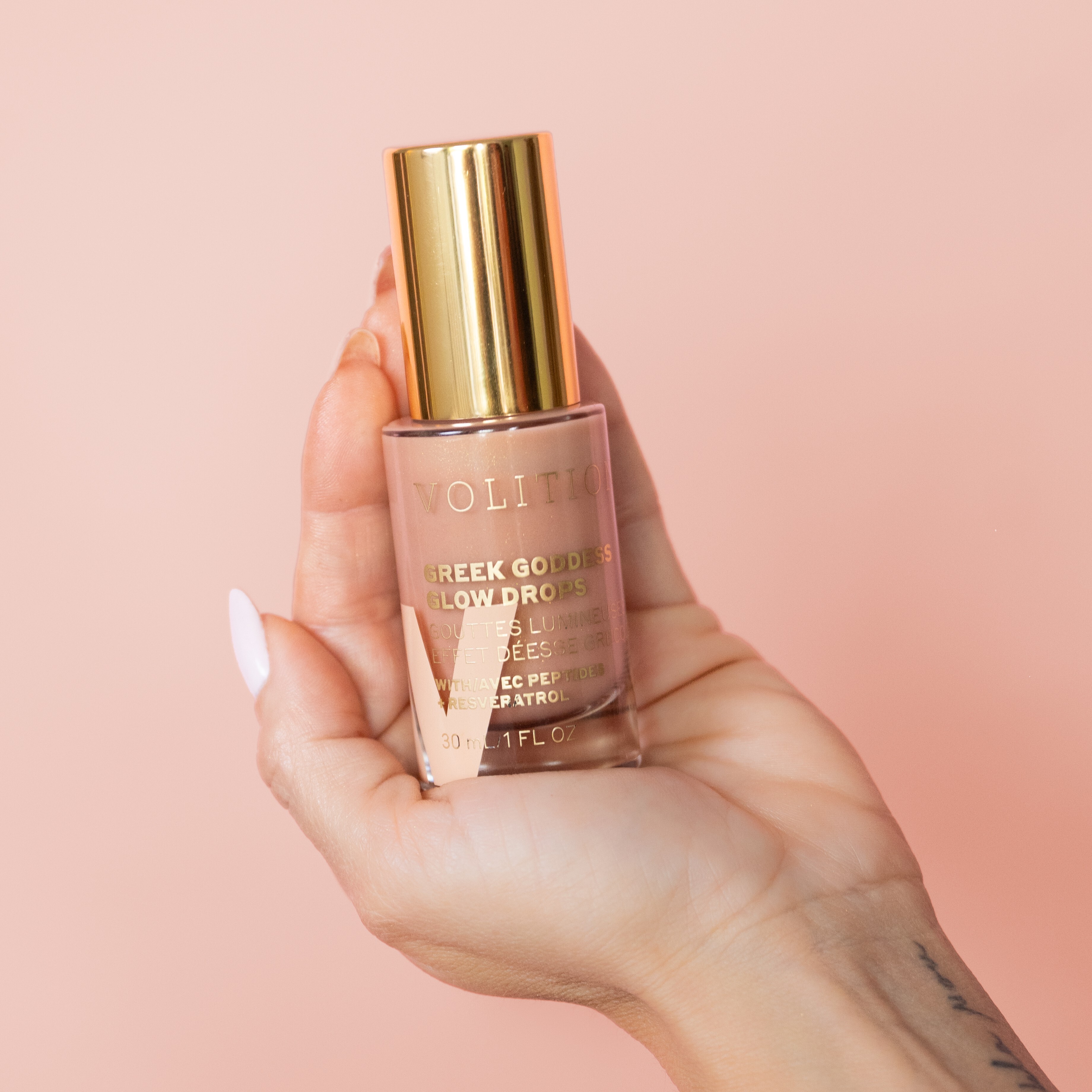
Here is how the formula works together. Resveratrol, the grape-derived antioxidant, helps improve the look of skin texture and tone. Peptides work to improve the look of firmness, visibly plump, and soften the appearance of fine lines and wrinkles. Olive squalane helps improve moisture retention for supple, comfortable skin, while hyaluronic acid and fig extract keep hydration topped up. Finally, light-reflecting pigments lend a subtle, lit-from-within shimmer, the kind of effortless, sun-drenched radiance that feels made for summer. Because resveratrol for skin works gradually, give the drops a few weeks of consistent use before you judge the results.
The texture layers beautifully. Apply during the day to your face, neck, and décolletage after moisturizer. You can wear the drops under or over makeup, or mix a little into your foundation or primer for an all-over glow. Suitable for all skin types, they are vegan, clean, cruelty-free, gluten-free, and silicone-free. For an extra hit of warmth, some people layer a drop of the Getaway Glow Liquid Sunshine Drops on top for a deeper bronzed finish.
|
|
FAQ Section
Q: Is resveratrol good for your skin?
A: For most people, yes. Resveratrol is a well-studied antioxidant that helps defend against free radicals and supports a visibly firmer, smoother, more even-looking complexion. As with any active, patch test first if your skin is sensitive.
Q: Can I use resveratrol every day?
A: Generally, yes. Resveratrol is gentle enough for daily use for most skin types. A morning application pairs well with SPF, while nighttime use supports overnight recovery.
Q: Does resveratrol help with wrinkles?
A: It can help with their appearance. As an antioxidant, resveratrol helps counter the oxidative stress that breaks down collagen, and it is often paired with peptides, as in Greek Goddess Glow Drops, to visibly firm and soften the look of fine lines.
Q: Can resveratrol replace sunscreen?
A: No. Antioxidants like resveratrol help neutralize free radicals, but they do not block UV rays. Always pair your antioxidant serum with a broad-spectrum SPF for real sun protection.
Q: What ingredients pair well with resveratrol?
A: Resveratrol plays nicely with hydrators like hyaluronic acid and squalane, peptides, and brightening vitamin C. Layering it with SPF in the morning gives you antioxidant support plus broad-spectrum sun protection.


