



You washed your face, skipped the heavy moisturizer, and still woke up with a shiny T-zone and two new spots along your jaw. If your skin behaves one way in winter and stages a full rebellion the moment temperatures climb, you are not imagining it. Summer acne is real, and the season itself plays a direct role in why your pores act up. Heat, humidity, sweat, and the hormones already steering your skin combine into a near-perfect setup for breakouts. The good news: once you understand what is actually happening on your skin, you can stay ahead of it.
What causes summer acne?
Summer acne is triggered by a chain reaction. Heat raises your skin's temperature and oil output, humidity slows sweat from evaporating, and the mix of sweat, oil, and dead skin cells settles into pores. Add sunscreen, makeup, and friction from hats or masks, and you have ideal conditions for clogged pores and breakouts.
In other words, summer acne rarely comes from one cause. The season stacks several triggers at once, and together they push oil-prone skin past its tipping point.
How do heat and humidity cause breakouts?
Your sebaceous glands respond to temperature. As your skin warms, it produces more oil, which is partly why your face looks shinier in July than in January.
More oil on its own is not the problem. The problem starts when that oil has nowhere to go. Humidity makes it worse: when the air is already saturated with moisture, sweat sits on your skin instead of evaporating. That damp film traps oil, dead skin cells, and bacteria against your pores, which is exactly the recipe for congestion.
The sweat, oil, and clogged-pore loop
Here is the cycle in plain terms. Heat boosts oil. Humidity keeps sweat from drying. Sweat and oil pool together, mix with the dead cells naturally shedding from your skin's surface, and settle into pores. Bacteria feed on that mixture, inflammation follows, and a blemish forms. Repeat daily through a heat wave, and you understand why summer acne can feel relentless.
Why does hormonal acne flare in the summer?
Summer does not rewrite your hormones, but it amplifies what they are already doing. Hormonal fluctuations, whether from your monthly cycle, stress, or perimenopause, set your baseline oil production. When androgens run high, your glands are primed to overproduce sebum. Layer summer heat on top of skin that is already oil-prone, and the visible result, shine, congestion, and blemishes, intensifies. It is a major reason summer acne tends to flare hardest on oily, hormone-driven skin.
This is the gap the Skin Rhythm line was built to close. Developed by board-certified OB-GYN Dr. Jacqueline Walters, the Skin Rhythm Balancing & Clearing Serum targets the visible signs of hormonal imbalance, the excess oil, stubborn blemishes, and uneven texture, rather than simply mopping up surface shine.
Does sweating cause acne?
Not directly. Sweat itself does not clog pores. The trouble comes when sweat lingers on your skin and mixes with oil, sunscreen, makeup, and bacteria, then gets pressed in by a hat, helmet, phone, or face covering. That combination of friction and trapped grime can lead to a type of breakout sometimes called acne mechanica, and it is a common contributor to summer acne. The fix is rarely to sweat less. It is to clean your skin promptly afterward, before the residue has time to settle.
How do you prevent summer breakouts?
You cannot turn off the heat, but you can control how your skin responds to it. A few targeted adjustments make a measurable difference in keeping summer acne under control.
Cleanse away sweat and oil
Your first line of defense is washing the day off, twice daily and after heavy sweating. A cleanser that does more than rinse is worth the swap in summer. The Skin Rhythm Balancing & Clearing Cleanser is a foaming, sulfate-free cream formula built as the first step in the routine, pairing the same blemish-fighting acids as the serum with niacinamide to help control oil from the start. Resist the urge to scrub. Aggressive cleansing strips your barrier and can trigger even more oil in response.
Treat with the right actives
This is where ingredient selection matters most. For oily, breakout-prone summer skin, look for:
• Salicylic acid, a BHA that is oil-soluble, so it can get inside the pore to clear the debris that causes blemishes.
• Niacinamide, which helps regulate oil and calm the look of redness while supporting your skin barrier.
• Azelaic acid, useful for the appearance of blemishes and the dark marks they leave behind.
• Mandelic acid, a gentle AHA for surface exfoliation and smoother texture.
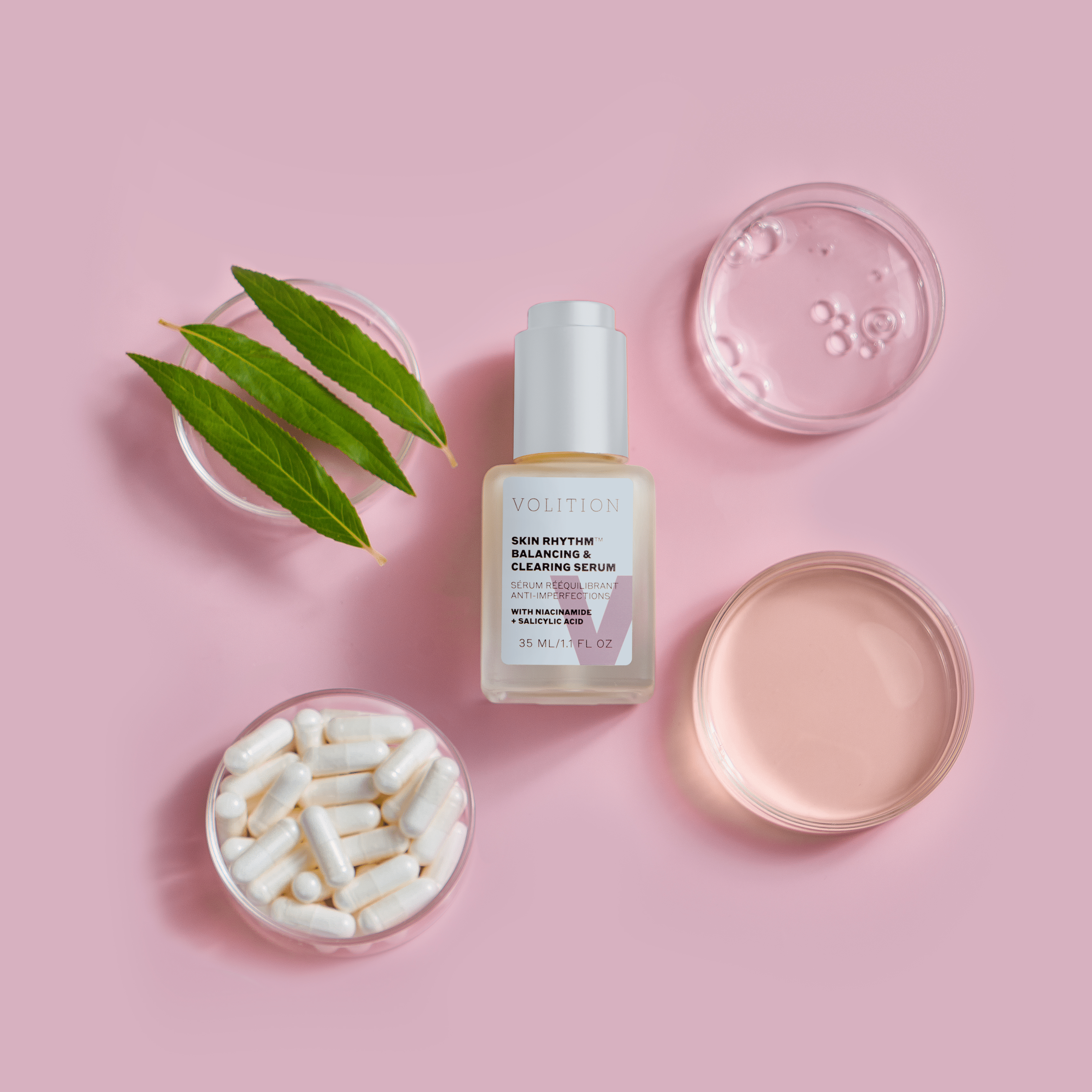
The Skin Rhythm Balancing & Clearing Serum brings all four together, layering its Acid Trio (salicylic from willowbark, azelaic, and mandelic) with niacinamide and CoQ10. In the brand's four-week clinical study of 29 women, 96% saw visible clearing of skin imperfections and 93% reported balancing of excess oil.
|
|
A quick note on balance: acids are powerful, and not every skin type wants all of them at full strength. If your skin runs dry or sensitive, introduce an acid-based treatment slowly, a few times a week, and watch how your skin responds.
Stay light on hydration and never skip SPF
Oily skin still needs water. Skipping moisturizer to dry out a breakout usually backfires, because dehydrated skin produces more oil to compensate. Reach for a lightweight, non-greasy option like the Snow Mushroom Water Serum, which delivers hydration without the heavy feel.
Sunscreen is non-negotiable, especially if you are using exfoliating acids, which can make skin more sun-sensitive. Sun exposure also darkens the marks left behind by old blemishes, so protecting your skin keeps those spots from lingering. A breathable formula like the Getaway Glow SPF30 Radiant Sunscreen gives broad-spectrum protection without the greasy slide. For help choosing a summer-proof formula, see our guide to the best mineral sunscreen for hot weather.
A simple summer routine for clearer skin
You do not need a ten-step regimen. You need the right few steps, done consistently:
1. Cleanse morning and night, and after workouts, with the Skin Rhythm Cleanser.
2. Treat with the Skin Rhythm Serum to target oil and blemishes.
3. Hydrate with a lightweight serum so your skin does not overcompensate with more oil.
4. Protect every morning with a breathable SPF.
Pairing the cleanser and serum gives you a cleanse-then-treat foundation that works with your skin's natural rhythm rather than against it. It is the simplest way to keep oil, blemishes, and post-breakout marks in check while the temperature climbs. When you treat summer acne at the source instead of chasing each new spot, clear skin becomes far easier to maintain.
|
|
FAQ
Q: Why do I break out more in the summer?
A: Higher temperatures increase oil production while humidity keeps sweat from evaporating, so oil, sweat, and dead skin cells mix and clog pores more easily. Sunscreen, makeup, and friction from hats or masks add to the load, making breakouts more common in warm months.
Q: Does sweating cause acne?
A: Sweat alone does not cause acne, but when it sits on the skin and combines with oil, bacteria, and product residue, it can clog pores. Cleansing soon after sweating, rather than letting it dry on your skin, is the most effective way to prevent these breakouts.
Q: What ingredients help with summer breakouts?
A: Salicylic acid clears oil and debris from inside pores, niacinamide helps regulate oil and calm redness, and azelaic acid targets both blemishes and the dark marks they leave behind. The Skin Rhythm Balancing & Clearing Serum combines all three with mandelic acid and CoQ10.
Q: Should I stop moisturizing if my skin is oily in summer?
A: No. Stripping moisture often makes oily skin produce even more oil to compensate. A lightweight, non-greasy hydrator keeps skin balanced without adding heaviness, which helps reduce the rebound oiliness that leads to clogged pores.


